Form 5500-EZ Explained Simply
By Garrett Clark
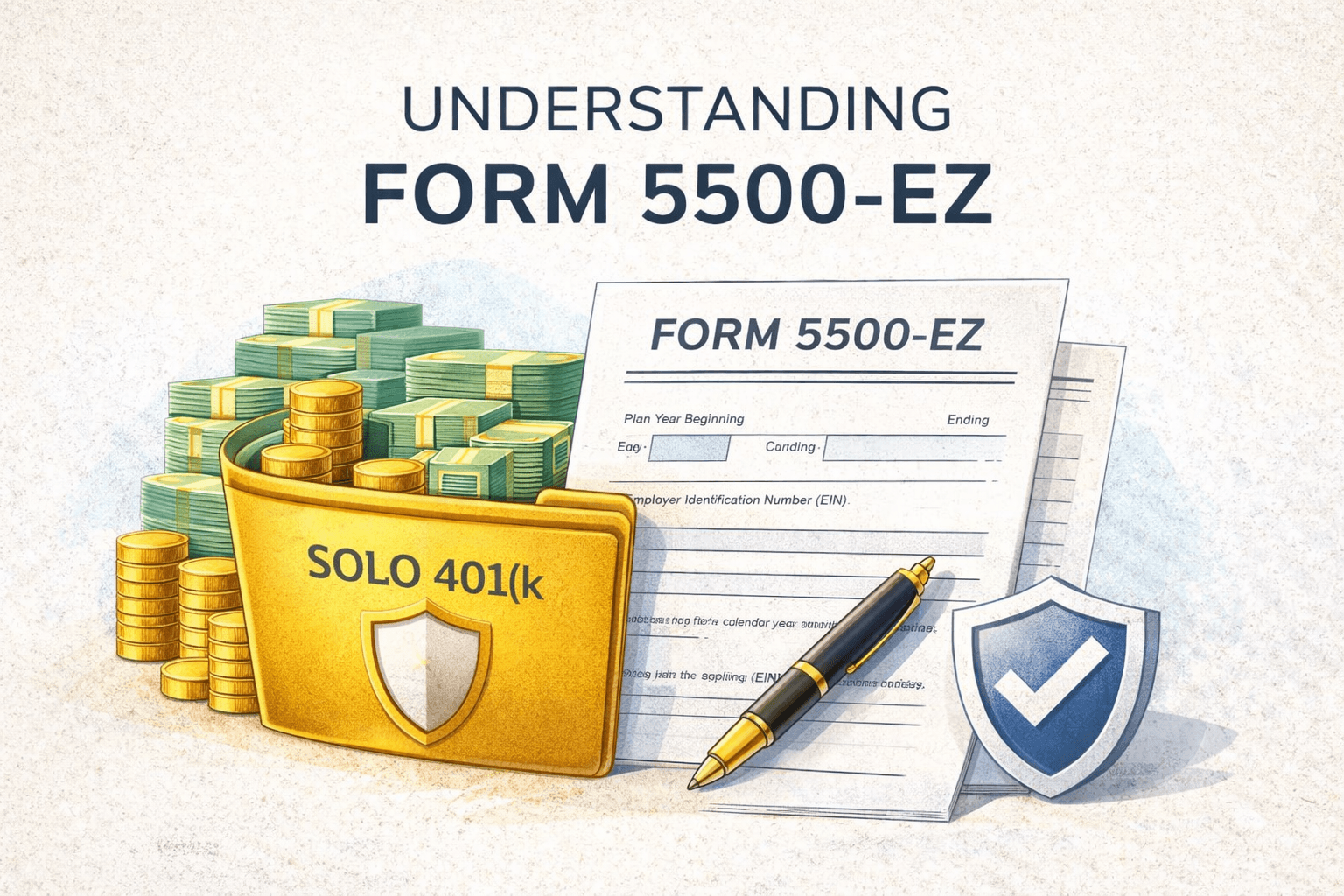
If you own a Solo 401(k), there is one important filing requirement you should understand: Form 5500-EZ. Many self-employed individuals and small business owners enjoy the flexibility and tax advantages of a Solo 401(k), but are often unaware of this required IRS form once their account reaches a certain size.
Missing this filing can lead to unnecessary penalties, even if your plan is otherwise in good standing. This guide breaks down what Form 5500-EZ is, who needs to file it, when it’s due, and why it matters.
What Is Form 5500-EZ?
Form 5500-EZ is an annual information return filed with the IRS for certain one-participant retirement plans, including most Solo 401(k)s.
It is important to understand that this is not a tax payment form. Instead, it reports basic information about your retirement plan, such as total assets, contributions, and whether the plan is active. The IRS uses this form to track retirement plans and ensure they remain compliant.
If your Solo 401(k) has not reached the filing threshold, you typically do not need to submit this form.
Who Needs to File?
You are required to file Form 5500-EZ if your Solo 401(k) plan assets exceed $250,000 at the end of the year.
You must also file the form if you terminate or close your Solo 401(k), regardless of the account balance.
If your plan is under $250,000 and still active, no filing is required for that year. However, it is important to monitor your account balance so you are prepared once you cross the threshold.
When Is Form 5500-EZ Due?
The form is due by July 31 each year for the prior calendar year.
For example, if your Solo 401(k) balance exceeded $250,000 on December 31, 2025, your filing deadline would be July 31, 2026.
If needed, you can request an extension, but filing on time helps you avoid penalties and keeps your plan in good standing.
What Information Is Reported?
Form 5500-EZ is relatively simple and does not require detailed transaction reporting. It typically includes:
Basic plan and business information
Employer Identification Number (EIN)
Total plan assets at the beginning and end of the year
Contributions made during the year
Whether the plan is active or terminated
You are not required to list individual investments or specific transactions within the plan.
What Happens If You Do Not File?
Failing to file Form 5500-EZ can result in IRS penalties, even if the mistake was unintentional. These penalties can accumulate quickly and become costly if not addressed.
The IRS does offer a late-filer correction program that may reduce penalties, but it is always better to file correctly and on time. Staying proactive helps avoid unnecessary stress and expense.
Why This Filing Matters
Form 5500-EZ is one of the few ongoing compliance requirements for Solo 401(k) owners. Filing it properly helps:
Keep your retirement plan compliant
Maintain your tax-advantaged status
Avoid IRS penalties
Ensure your plan remains in good standing long term
Unlike employer-sponsored plans, there is no third-party administrator automatically handling this for you. The responsibility ultimately falls on the plan owner.
Common Mistakes to Avoid
Many Solo 401(k) owners run into issues simply because they are unaware of the requirement. Some common mistakes include:
Not realizing that the $250,000 threshold has been exceeded
Forgetting to file when closing a plan
Using the wrong EIN or plan information
Waiting until penalties have already accumulated
Being aware of these points ahead of time can help you stay compliant and avoid unnecessary complications.
Final Thoughts
Form 5500-EZ is not complicated, but it is essential.
If your Solo 401(k) has reached $250,000 or you are closing your plan, this annual filing becomes part of your retirement management process. Staying on top of it protects your retirement savings and keeps your long-term strategy on track.
If you are unsure whether you need to file or want help completing the form, Survival401k can help.
This content is for educational and informational purposes only and should not be considered tax, legal, or financial advice.
This article is general education, not legal, tax, investment or accounting advice. Survival 401K is not a bank, custodian, registered investment adviser, law firm, CPA firm, lender or fiduciary, and does not recommend specific investments. Rules and figures change - confirm anything time-sensitive with your own adviser and with official IRS guidance.