by
Garrett Clark
Retirement Planning
How Fitness Professionals on 1099 Income Can Use an LLC and Solo 401(k) to Build Wealth and Their Business
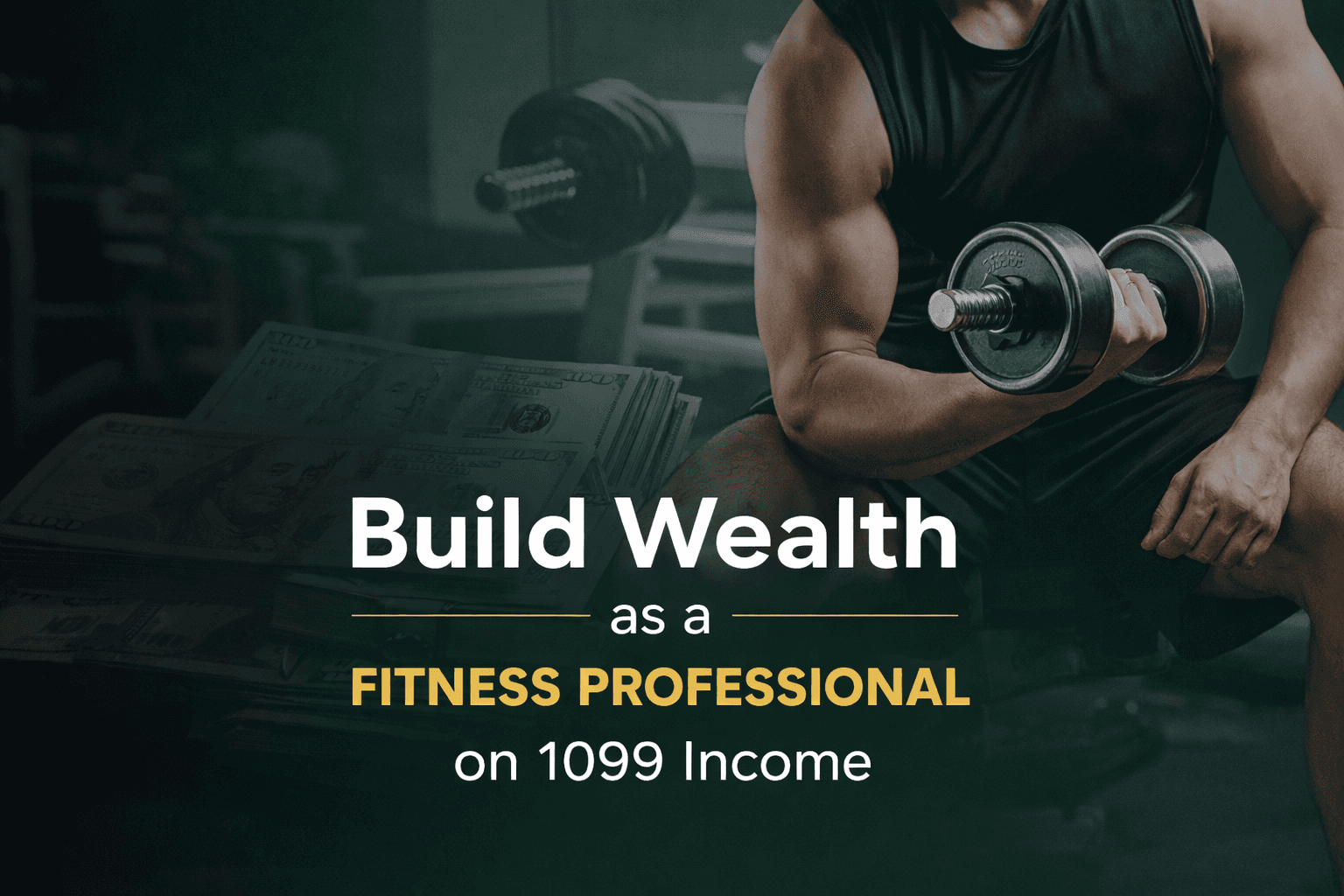
Fitness professionals earning 1099 income have a unique opportunity to build real wealth. This guide breaks down how to use an LLC and Solo 401(k) together to reduce taxes, access capital, and create long-term financial growth through smarter structure and strategy.
Search
Search
Category

Any Question?
Let’s talk

Any Question?
Let’s talk
Search
Search
Category

Any Question?
Let’s talk
Fitness professionals operate in one of the most opportunity-rich financial positions today. Whether you are a personal trainer, gym owner, online coach, or fitness influencer, earning 1099 income gives you something most employees never have: control.
No employer plan. No automatic structure. No built-in system.
While that can feel uncertain, it actually creates a powerful advantage. With the right setup, you can build a system that not only grows your business but also compounds wealth over time.
By combining an LLC with a Solo 401(k), fitness professionals can create a framework that reduces taxes, increases flexibility, and opens doors to advanced wealth-building strategies most people never access.
Step One: Structure Your Income With an LLC
An LLC is the foundation of your financial system. Without structure, income is just income. With an LLC, income becomes strategic.
When you operate under an LLC, you separate personal and business finances, which protects your assets and creates a clean, professional structure for growth.
Why This Matters
Fitness professionals often juggle multiple income streams:
In-person training
Online coaching programs
Brand deals and sponsorships
Affiliate income
Digital products and courses
Without structure, this becomes messy. With an LLC, it becomes scalable.
Advanced Wealth Uses of an LLC
An LLC is not just for an organization; it is a tool for building wealth:
Deduct and reinvest: Write off legitimate expenses and reinvest the savings back into your business
Control cash flow: Keep earnings inside the business to strategically deploy capital
Expand into new ventures: Launch additional income streams under one entity
Position for S-Corp election: Reduce self-employment taxes as income grows
The LLC is where money is earned and optimized.
Step Two: Use a Solo 401(k) as a Wealth Engine
A Solo 401(k) takes what your LLC generates and turns it into long-term wealth.
Most people think of retirement accounts as restrictive. A properly structured Solo 401(k) is the opposite. It gives you control, flexibility, and scale.
Dual Contribution Advantage
You can contribute as:
The employee
The employer
This allows you to significantly reduce taxable income while moving large amounts of money into a tax-advantaged environment.

“Most fitness professionals focus on making more money. The ones who build wealth focus on structuring it.”
Garrett Clark
Director of Sales
Investment Control
Unlike traditional plans, a Solo 401(k) allows you to direct how your money is invested.
Depending on the structure, this can include:
Stocks and ETFs
Real estate
Private lending
Alternative investments
This turns your retirement account into a growth vehicle, not just a savings account.
Step Three: Use Leverage and Capital Strategically
This is where most people miss the opportunity.
A Solo 401(k) is not just for saving; it can also be used to access capital strategically.
The Solo 401(k) Loan Feature
A properly structured Solo 401(k) may allow you to borrow from your own plan within IRS limits.
This creates a powerful advantage:
You access capital without relying on banks
You repay yourself with interest
Your money continues working within your system
Strategic Uses of the Loan Feature
For fitness professionals, this can be used to:
Open or expand a gym or studio
Invest in high-quality equipment
Launch or scale an online coaching platform
Fund marketing and brand growth
Bridge short-term cash flow gaps
Instead of seeking outside funding, you may be able to be your own lender.
Private Lending Inside a Solo 401(k)
Another advanced strategy is using your Solo 401(k) to lend money to third parties (not yourself or disqualified persons).
This allows you to:
Earn interest inside your retirement account
Generate passive income
Build consistent returns independent of your business
Real Estate and Alternative Investing
With the right structure, your Solo 401(k) can invest in:
Rental properties
Real estate deals
Private placements
This creates diversification beyond your fitness income and allows your retirement account to grow from multiple sources.
How the LLC and Solo 401(k) Work Together
This is where the real power comes in.
Think of it as a system:
LLC = Income Engine
Solo 401(k) = Wealth Engine
Your LLC:
Generates income
Reduces taxes through deductions
Creates cash flow
Your Solo 401(k):
Captures that income
Protects it from taxes
Grows it through investments
Together, they create a loop:
Earn income through your business
Reduce taxes strategically
Move capital into your Solo 401(k)
Invest and grow wealth
Repeat at a higher level
Building Today While Preparing for Tomorrow
The fitness industry is physically demanding and often unpredictable. Income can peak early, fluctuate, or depend heavily on personal branding.
That is why structure matters.
When you build systems early:
You are not relying on your body forever
You are not dependent on an inconsistent income
You are building assets alongside your business
What This Strategy Actually Does
Reduces unnecessary taxes
Protects your income and assets
Creates access to capital when needed
Builds long-term, compounding wealth
Most fitness professionals focus only on earning more.
The real advantage comes from keeping more and growing it correctly.
The Bigger Picture
For 1099 fitness professionals, the goal is not just income. It is control.
When structured correctly:
Your business funds your lifestyle
Your tax strategy preserves your income
Your investments build your future
Retirement becomes the outcome.
Control is the strategy.
Next Steps
If you are earning 1099 income and want to:
Lower your tax burden
Structure your business correctly
Access more financial opportunities
Build long-term wealth
It starts with putting the right system in place.
This content is for educational purposes only and should not be considered legal, tax, or investment advice. Every individual situation is different, and strategies discussed may not be appropriate for all readers.
Fitness professionals operate in one of the most opportunity-rich financial positions today. Whether you are a personal trainer, gym owner, online coach, or fitness influencer, earning 1099 income gives you something most employees never have: control.
No employer plan. No automatic structure. No built-in system.
While that can feel uncertain, it actually creates a powerful advantage. With the right setup, you can build a system that not only grows your business but also compounds wealth over time.
By combining an LLC with a Solo 401(k), fitness professionals can create a framework that reduces taxes, increases flexibility, and opens doors to advanced wealth-building strategies most people never access.
Step One: Structure Your Income With an LLC
An LLC is the foundation of your financial system. Without structure, income is just income. With an LLC, income becomes strategic.
When you operate under an LLC, you separate personal and business finances, which protects your assets and creates a clean, professional structure for growth.
Why This Matters
Fitness professionals often juggle multiple income streams:
In-person training
Online coaching programs
Brand deals and sponsorships
Affiliate income
Digital products and courses
Without structure, this becomes messy. With an LLC, it becomes scalable.
Advanced Wealth Uses of an LLC
An LLC is not just for an organization; it is a tool for building wealth:
Deduct and reinvest: Write off legitimate expenses and reinvest the savings back into your business
Control cash flow: Keep earnings inside the business to strategically deploy capital
Expand into new ventures: Launch additional income streams under one entity
Position for S-Corp election: Reduce self-employment taxes as income grows
The LLC is where money is earned and optimized.
Step Two: Use a Solo 401(k) as a Wealth Engine
A Solo 401(k) takes what your LLC generates and turns it into long-term wealth.
Most people think of retirement accounts as restrictive. A properly structured Solo 401(k) is the opposite. It gives you control, flexibility, and scale.
Dual Contribution Advantage
You can contribute as:
The employee
The employer
This allows you to significantly reduce taxable income while moving large amounts of money into a tax-advantaged environment.

“Most fitness professionals focus on making more money. The ones who build wealth focus on structuring it.”
Garrett Clark
Director of Sales
Investment Control
Unlike traditional plans, a Solo 401(k) allows you to direct how your money is invested.
Depending on the structure, this can include:
Stocks and ETFs
Real estate
Private lending
Alternative investments
This turns your retirement account into a growth vehicle, not just a savings account.
Step Three: Use Leverage and Capital Strategically
This is where most people miss the opportunity.
A Solo 401(k) is not just for saving; it can also be used to access capital strategically.
The Solo 401(k) Loan Feature
A properly structured Solo 401(k) may allow you to borrow from your own plan within IRS limits.
This creates a powerful advantage:
You access capital without relying on banks
You repay yourself with interest
Your money continues working within your system
Strategic Uses of the Loan Feature
For fitness professionals, this can be used to:
Open or expand a gym or studio
Invest in high-quality equipment
Launch or scale an online coaching platform
Fund marketing and brand growth
Bridge short-term cash flow gaps
Instead of seeking outside funding, you may be able to be your own lender.
Private Lending Inside a Solo 401(k)
Another advanced strategy is using your Solo 401(k) to lend money to third parties (not yourself or disqualified persons).
This allows you to:
Earn interest inside your retirement account
Generate passive income
Build consistent returns independent of your business
Real Estate and Alternative Investing
With the right structure, your Solo 401(k) can invest in:
Rental properties
Real estate deals
Private placements
This creates diversification beyond your fitness income and allows your retirement account to grow from multiple sources.
How the LLC and Solo 401(k) Work Together
This is where the real power comes in.
Think of it as a system:
LLC = Income Engine
Solo 401(k) = Wealth Engine
Your LLC:
Generates income
Reduces taxes through deductions
Creates cash flow
Your Solo 401(k):
Captures that income
Protects it from taxes
Grows it through investments
Together, they create a loop:
Earn income through your business
Reduce taxes strategically
Move capital into your Solo 401(k)
Invest and grow wealth
Repeat at a higher level
Building Today While Preparing for Tomorrow
The fitness industry is physically demanding and often unpredictable. Income can peak early, fluctuate, or depend heavily on personal branding.
That is why structure matters.
When you build systems early:
You are not relying on your body forever
You are not dependent on an inconsistent income
You are building assets alongside your business
What This Strategy Actually Does
Reduces unnecessary taxes
Protects your income and assets
Creates access to capital when needed
Builds long-term, compounding wealth
Most fitness professionals focus only on earning more.
The real advantage comes from keeping more and growing it correctly.
The Bigger Picture
For 1099 fitness professionals, the goal is not just income. It is control.
When structured correctly:
Your business funds your lifestyle
Your tax strategy preserves your income
Your investments build your future
Retirement becomes the outcome.
Control is the strategy.
Next Steps
If you are earning 1099 income and want to:
Lower your tax burden
Structure your business correctly
Access more financial opportunities
Build long-term wealth
It starts with putting the right system in place.
This content is for educational purposes only and should not be considered legal, tax, or investment advice. Every individual situation is different, and strategies discussed may not be appropriate for all readers.