User Icon

by

Garrett Clark

Category Icon

Debt Management

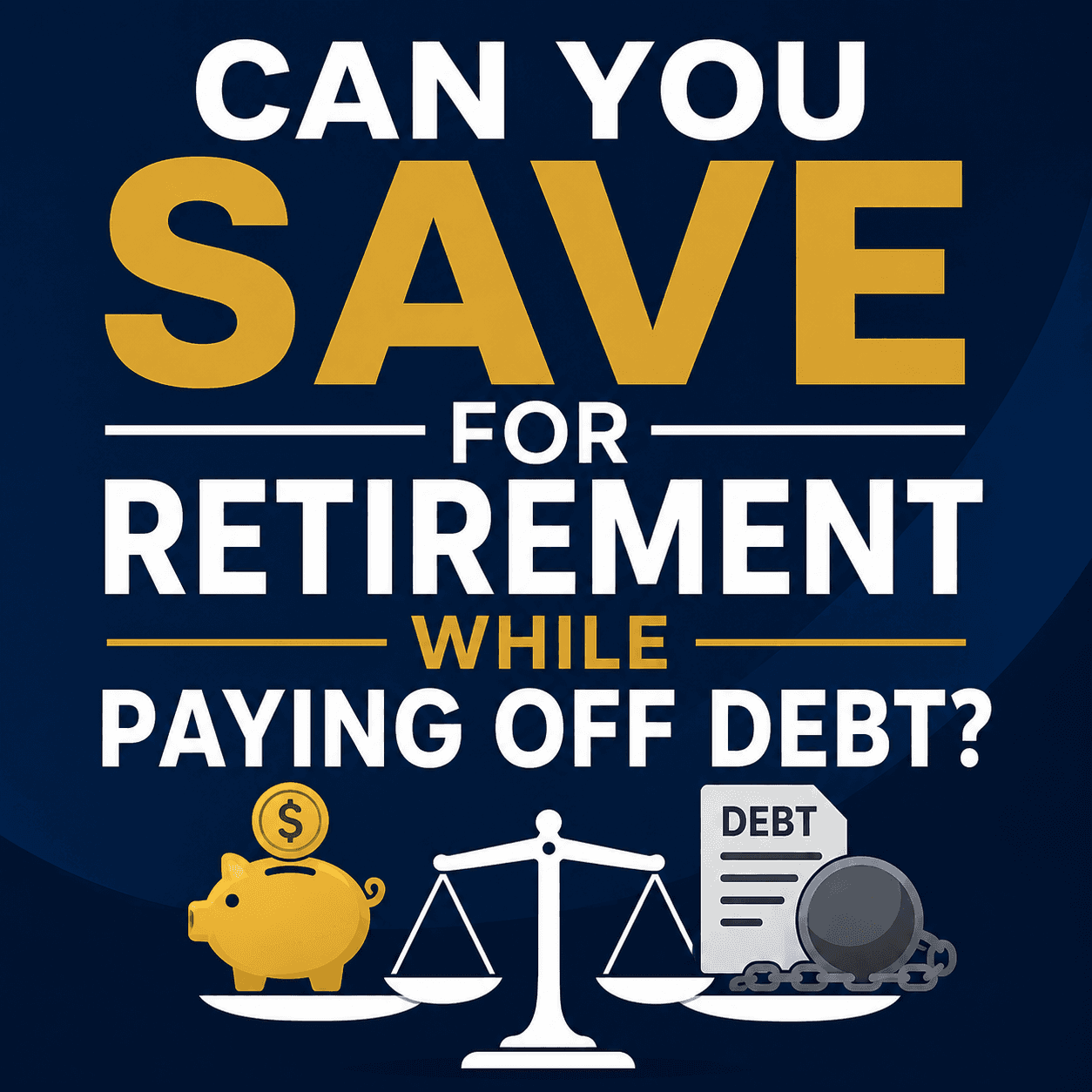
Can You Save for Retirement While Paying Off Debt?

Wondering if you should pay off debt before saving for retirement? Learn how to balance debt repayment with long-term investing, when it makes sense to prioritize one over the other, and how a Solo 401(k) can help eligible self-employed individuals and business owners build wealth while responsibly managing debt.

Background Image

The short answer is yes—but the right strategy depends on the type of debt you have, the interest you're paying, your financial goals, and your retirement timeline.

Many Americans believe they need to eliminate every dollar of debt before they begin saving for retirement. While that may sound like the safest approach, waiting too long to invest can cost far more than many people realize.

If you're a business owner, self-employed professional, freelancer, or real estate investor, balancing debt payments with retirement contributions is one of the most important financial decisions you'll make. Every dollar you earn has multiple jobs to do—pay bills, reduce debt, grow your business, and prepare for retirement.

The good news is that paying off debt and saving for retirement don't have to be competing goals. In many cases, they can work together as part of a well-rounded financial strategy.

In this guide, we'll explain when it makes sense to prioritize debt, when retirement savings should come first, and how a Solo 401(k) may help eligible self-employed individuals build long-term wealth while managing debt responsibly.


Why This Question Is So Common

Debt has become a normal part of life for many Americans. Mortgages, student loans, auto loans, business financing, and credit cards are common financial tools, but not all debt is created equal.

At the same time, retirement often feels like something that can wait until "later."

Many people tell themselves:

  • "I'll start investing once my credit cards are paid off."

  • "I'll worry about retirement after I finish paying my student loans."

  • "Once my business grows, then I'll start saving."

Unfortunately, later often becomes years later.

One of the biggest advantages retirement investing has is time. The earlier money begins working for you, the more opportunity it has to grow through compounding.

Waiting too long can make reaching your retirement goals significantly more difficult.


Understanding Good Debt vs. Bad Debt

Before deciding where your money should go, it's important to understand the difference between productive debt and expensive debt.

Generally speaking, good debt is debt used to purchase assets or create opportunities that may increase in value or generate income. Examples can include a mortgage on a primary residence, financing for a profitable business, or an investment property that produces positive cash flow.

Bad debt, on the other hand, is typically debt used to purchase depreciating assets or consumer goods that do not produce income. High-interest credit card balances are one of the most common examples.

This distinction matters because the cost of carrying debt—and the potential return from investing—can vary significantly.

For example, carrying a credit card balance with a high interest rate may have a much greater impact on your finances than making scheduled payments on a lower-interest mortgage.

Every situation is unique, which is why there is rarely a one-size-fits-all answer.


The Cost of Waiting to Invest

Many people underestimate how valuable time can be when saving for retirement.

Imagine two investors.

Investor A begins investing at age 25 and contributes consistently for many years.

Investor B waits until age 35 because they wanted to eliminate every dollar of debt before investing.

Even if Investor B eventually contributes more money each year, Investor A may still accumulate significantly more retirement savings simply because their money had an additional decade to grow.

Compounding allows investment earnings to potentially generate additional earnings over time.

While investment returns are never guaranteed and markets fluctuate, beginning earlier can have a meaningful impact on long-term retirement outcomes.

This is why many financial professionals encourage individuals to avoid unnecessarily delaying retirement savings whenever possible.


When Paying Off Debt Should Come First

Although retirement investing is important, there are situations where aggressively reducing debt should be a top priority.

High-interest consumer debt—especially credit cards—can quickly become difficult to manage if balances continue growing faster than they are being paid down.

For example, carrying several high-interest credit cards while making only minimum payments can create a cycle that becomes increasingly expensive over time.

Similarly, if you are struggling to make required monthly payments, missing payments, or relying on new debt simply to cover living expenses, improving cash flow and reducing financial stress may need to come before increasing retirement contributions.

Building a strong financial foundation is essential.


When Saving for Retirement Should Remain a Priority

On the other hand, not every type of debt should automatically prevent you from investing for retirement.

Many successful business owners, homeowners, and real estate investors carry manageable debt while continuing to invest for the future.

For example, someone with a fixed-rate mortgage and stable income may decide to continue making scheduled mortgage payments while also contributing to retirement.

Likewise, entrepreneurs often finance business equipment or expansion while continuing to build retirement savings.

The objective is not necessarily to eliminate every loan before investing. Instead, the goal is to manage debt responsibly while allowing long-term investments to begin working.


Finding the Right Balance

Rather than asking:

"Should I pay off debt or save for retirement?"

A better question is often:

"How can I do both?"

Many people successfully divide their available cash flow between debt reduction and retirement savings.

For example, someone may:

  • Pay more than the minimum on high-interest debt.

  • Continue making required payments on lower-interest loans.

  • Build an emergency fund.

  • Make consistent retirement contributions.

  • Increase retirement savings as debt balances decline.

This balanced approach allows progress toward multiple financial goals instead of focusing exclusively on one.


How a Solo 401(k) Can Help Self-Employed Individuals

For eligible self-employed individuals and business owners, a Solo 401(k) can become one of the most powerful retirement planning tools available.

Unlike many traditional retirement accounts, a Solo 401(k) offers higher contribution opportunities for many entrepreneurs because eligible individuals may contribute both as the employee and employer, subject to IRS limits and compensation requirements.

The plan may also offer features such as:

  • Traditional (pre-tax) contributions

  • Roth contributions, if permitted by the plan

  • Eligible rollovers from certain retirement accounts

  • Participant loans, if permitted by the plan

  • Alternative investments such as real estate, private lending, and certain private businesses through a properly structured self-directed Solo 401(k)

These features can provide flexibility while allowing retirement savings to continue growing alongside other financial goals.


Don't Let Retirement Become an Afterthought

Business owners are especially vulnerable to postponing retirement planning.

Many entrepreneurs reinvest every available dollar back into their business, assuming they will simply save more later.

While investing in your business can absolutely be worthwhile, retirement planning should not be forgotten.

Unexpected events happen.

Businesses experience slow years.

Markets change.

Health changes.

Beginning retirement planning earlier provides more time to build long-term financial security.

Info debt vs retirement

What About Student Loans?

Student loans are another area where many people delay retirement investing.

If your loans carry manageable interest rates and fit comfortably within your monthly budget, it may still make sense to contribute toward retirement while continuing scheduled payments.

Waiting ten or fifteen years before beginning retirement savings simply because student loans remain outstanding may reduce the benefits of long-term compounding.

The right strategy depends on your income, interest rates, repayment plan, tax situation, and overall financial goals.


Should You Pay Off Your Mortgage Before Investing?

Many homeowners dream of entering retirement without a mortgage.

That goal is understandable.

However, whether paying off a mortgage early is the best financial decision depends on several factors, including the mortgage interest rate, investment goals, available cash flow, and risk tolerance.

For some individuals, investing additional dollars for retirement while making regular mortgage payments may better align with their long-term objectives.

Others may prioritize becoming debt-free before retirement.

There is no universal answer.


Retirement Is About More Than Eliminating Debt

Being debt-free is a wonderful financial milestone.

But being debt-free without sufficient retirement savings can create a different challenge later in life.

The goal is not simply eliminating debt.

The goal is achieving financial independence.

Financial independence often requires:

  • Managing debt responsibly

  • Building emergency savings

  • Investing consistently

  • Planning for taxes

  • Protecting assets

  • Preparing for retirement

Each piece supports the others.


Common Mistakes to Avoid

One common mistake is waiting until every debt is completely eliminated before investing for retirement. While reducing debt is important, delaying retirement savings for many years can mean missing valuable time for long-term growth.

Another mistake is contributing aggressively to retirement while ignoring high-interest debt that continues growing faster than it can reasonably be repaid. In some situations, reducing expensive debt may provide a stronger financial benefit than increasing investments.

Some individuals also fail to revisit their financial plan. As income increases or debts are paid off, retirement contributions should be reviewed regularly. A strategy that worked five years ago may no longer be the best approach today.

Finally, many business owners focus entirely on growing their companies while neglecting their personal retirement plan. Your business can be a valuable asset, but it should not be your only retirement strategy.


Questions to Ask Yourself

If you're trying to decide whether to focus on debt reduction or retirement savings, ask yourself:

  • What type of debt do I have?

  • What are the interest rates?

  • Am I making progress toward paying it off?

  • Do I have an emergency fund?

  • Am I taking advantage of retirement opportunities available to me?

  • How many years do I have until retirement?

  • Will delaying retirement investing cost me valuable years of compound growth?

Answering these questions can help clarify which strategy best fits your situation.


The Bottom Line

So, can you save for retirement while paying off debt?

For many people, yes.

Paying down debt and investing for retirement are not mutually exclusive. The right balance depends on your income, expenses, debt obligations, retirement goals, and long-term financial plan.

If you're self-employed or own a business, a Solo 401(k) may provide a flexible and tax-advantaged way to begin building retirement savings while you continue managing debt responsibly. Rather than waiting until every loan is gone, many individuals benefit from developing a strategy that allows them to reduce debt, build wealth, and prepare for the future at the same time.

At Survival401k, we help eligible entrepreneurs, freelancers, consultants, real estate investors, and business owners understand how a properly structured Solo 401(k) can fit into their overall financial strategy. Whether your goal is reducing taxable income, investing beyond Wall Street, or creating a retirement plan that aligns with your business and lifestyle, we're here to help you make informed decisions for the future.

Ready to take control of your retirement? Contact the team at Survival401k or explore our educational resources to learn how a Solo 401(k) may fit into your long-term financial plan.


Disclaimer: This article is provided for educational purposes only and should not be considered tax, legal, financial, or investment advice. Retirement planning, debt management, investment decisions, and Solo 401(k) eligibility depend on individual circumstances. Consult qualified financial, tax, and legal professionals before making financial decisions.

The short answer is yes—but the right strategy depends on the type of debt you have, the interest you're paying, your financial goals, and your retirement timeline.

Many Americans believe they need to eliminate every dollar of debt before they begin saving for retirement. While that may sound like the safest approach, waiting too long to invest can cost far more than many people realize.

If you're a business owner, self-employed professional, freelancer, or real estate investor, balancing debt payments with retirement contributions is one of the most important financial decisions you'll make. Every dollar you earn has multiple jobs to do—pay bills, reduce debt, grow your business, and prepare for retirement.

The good news is that paying off debt and saving for retirement don't have to be competing goals. In many cases, they can work together as part of a well-rounded financial strategy.

In this guide, we'll explain when it makes sense to prioritize debt, when retirement savings should come first, and how a Solo 401(k) may help eligible self-employed individuals build long-term wealth while managing debt responsibly.


Why This Question Is So Common

Debt has become a normal part of life for many Americans. Mortgages, student loans, auto loans, business financing, and credit cards are common financial tools, but not all debt is created equal.

At the same time, retirement often feels like something that can wait until "later."

Many people tell themselves:

  • "I'll start investing once my credit cards are paid off."

  • "I'll worry about retirement after I finish paying my student loans."

  • "Once my business grows, then I'll start saving."

Unfortunately, later often becomes years later.

One of the biggest advantages retirement investing has is time. The earlier money begins working for you, the more opportunity it has to grow through compounding.

Waiting too long can make reaching your retirement goals significantly more difficult.


Understanding Good Debt vs. Bad Debt

Before deciding where your money should go, it's important to understand the difference between productive debt and expensive debt.

Generally speaking, good debt is debt used to purchase assets or create opportunities that may increase in value or generate income. Examples can include a mortgage on a primary residence, financing for a profitable business, or an investment property that produces positive cash flow.

Bad debt, on the other hand, is typically debt used to purchase depreciating assets or consumer goods that do not produce income. High-interest credit card balances are one of the most common examples.

This distinction matters because the cost of carrying debt—and the potential return from investing—can vary significantly.

For example, carrying a credit card balance with a high interest rate may have a much greater impact on your finances than making scheduled payments on a lower-interest mortgage.

Every situation is unique, which is why there is rarely a one-size-fits-all answer.


The Cost of Waiting to Invest

Many people underestimate how valuable time can be when saving for retirement.

Imagine two investors.

Investor A begins investing at age 25 and contributes consistently for many years.

Investor B waits until age 35 because they wanted to eliminate every dollar of debt before investing.

Even if Investor B eventually contributes more money each year, Investor A may still accumulate significantly more retirement savings simply because their money had an additional decade to grow.

Compounding allows investment earnings to potentially generate additional earnings over time.

While investment returns are never guaranteed and markets fluctuate, beginning earlier can have a meaningful impact on long-term retirement outcomes.

This is why many financial professionals encourage individuals to avoid unnecessarily delaying retirement savings whenever possible.


When Paying Off Debt Should Come First

Although retirement investing is important, there are situations where aggressively reducing debt should be a top priority.

High-interest consumer debt—especially credit cards—can quickly become difficult to manage if balances continue growing faster than they are being paid down.

For example, carrying several high-interest credit cards while making only minimum payments can create a cycle that becomes increasingly expensive over time.

Similarly, if you are struggling to make required monthly payments, missing payments, or relying on new debt simply to cover living expenses, improving cash flow and reducing financial stress may need to come before increasing retirement contributions.

Building a strong financial foundation is essential.


When Saving for Retirement Should Remain a Priority

On the other hand, not every type of debt should automatically prevent you from investing for retirement.

Many successful business owners, homeowners, and real estate investors carry manageable debt while continuing to invest for the future.

For example, someone with a fixed-rate mortgage and stable income may decide to continue making scheduled mortgage payments while also contributing to retirement.

Likewise, entrepreneurs often finance business equipment or expansion while continuing to build retirement savings.

The objective is not necessarily to eliminate every loan before investing. Instead, the goal is to manage debt responsibly while allowing long-term investments to begin working.


Finding the Right Balance

Rather than asking:

"Should I pay off debt or save for retirement?"

A better question is often:

"How can I do both?"

Many people successfully divide their available cash flow between debt reduction and retirement savings.

For example, someone may:

  • Pay more than the minimum on high-interest debt.

  • Continue making required payments on lower-interest loans.

  • Build an emergency fund.

  • Make consistent retirement contributions.

  • Increase retirement savings as debt balances decline.

This balanced approach allows progress toward multiple financial goals instead of focusing exclusively on one.


How a Solo 401(k) Can Help Self-Employed Individuals

For eligible self-employed individuals and business owners, a Solo 401(k) can become one of the most powerful retirement planning tools available.

Unlike many traditional retirement accounts, a Solo 401(k) offers higher contribution opportunities for many entrepreneurs because eligible individuals may contribute both as the employee and employer, subject to IRS limits and compensation requirements.

The plan may also offer features such as:

  • Traditional (pre-tax) contributions

  • Roth contributions, if permitted by the plan

  • Eligible rollovers from certain retirement accounts

  • Participant loans, if permitted by the plan

  • Alternative investments such as real estate, private lending, and certain private businesses through a properly structured self-directed Solo 401(k)

These features can provide flexibility while allowing retirement savings to continue growing alongside other financial goals.


Don't Let Retirement Become an Afterthought

Business owners are especially vulnerable to postponing retirement planning.

Many entrepreneurs reinvest every available dollar back into their business, assuming they will simply save more later.

While investing in your business can absolutely be worthwhile, retirement planning should not be forgotten.

Unexpected events happen.

Businesses experience slow years.

Markets change.

Health changes.

Beginning retirement planning earlier provides more time to build long-term financial security.

Info debt vs retirement

What About Student Loans?

Student loans are another area where many people delay retirement investing.

If your loans carry manageable interest rates and fit comfortably within your monthly budget, it may still make sense to contribute toward retirement while continuing scheduled payments.

Waiting ten or fifteen years before beginning retirement savings simply because student loans remain outstanding may reduce the benefits of long-term compounding.

The right strategy depends on your income, interest rates, repayment plan, tax situation, and overall financial goals.


Should You Pay Off Your Mortgage Before Investing?

Many homeowners dream of entering retirement without a mortgage.

That goal is understandable.

However, whether paying off a mortgage early is the best financial decision depends on several factors, including the mortgage interest rate, investment goals, available cash flow, and risk tolerance.

For some individuals, investing additional dollars for retirement while making regular mortgage payments may better align with their long-term objectives.

Others may prioritize becoming debt-free before retirement.

There is no universal answer.


Retirement Is About More Than Eliminating Debt

Being debt-free is a wonderful financial milestone.

But being debt-free without sufficient retirement savings can create a different challenge later in life.

The goal is not simply eliminating debt.

The goal is achieving financial independence.

Financial independence often requires:

  • Managing debt responsibly

  • Building emergency savings

  • Investing consistently

  • Planning for taxes

  • Protecting assets

  • Preparing for retirement

Each piece supports the others.


Common Mistakes to Avoid

One common mistake is waiting until every debt is completely eliminated before investing for retirement. While reducing debt is important, delaying retirement savings for many years can mean missing valuable time for long-term growth.

Another mistake is contributing aggressively to retirement while ignoring high-interest debt that continues growing faster than it can reasonably be repaid. In some situations, reducing expensive debt may provide a stronger financial benefit than increasing investments.

Some individuals also fail to revisit their financial plan. As income increases or debts are paid off, retirement contributions should be reviewed regularly. A strategy that worked five years ago may no longer be the best approach today.

Finally, many business owners focus entirely on growing their companies while neglecting their personal retirement plan. Your business can be a valuable asset, but it should not be your only retirement strategy.


Questions to Ask Yourself

If you're trying to decide whether to focus on debt reduction or retirement savings, ask yourself:

  • What type of debt do I have?

  • What are the interest rates?

  • Am I making progress toward paying it off?

  • Do I have an emergency fund?

  • Am I taking advantage of retirement opportunities available to me?

  • How many years do I have until retirement?

  • Will delaying retirement investing cost me valuable years of compound growth?

Answering these questions can help clarify which strategy best fits your situation.


The Bottom Line

So, can you save for retirement while paying off debt?

For many people, yes.

Paying down debt and investing for retirement are not mutually exclusive. The right balance depends on your income, expenses, debt obligations, retirement goals, and long-term financial plan.

If you're self-employed or own a business, a Solo 401(k) may provide a flexible and tax-advantaged way to begin building retirement savings while you continue managing debt responsibly. Rather than waiting until every loan is gone, many individuals benefit from developing a strategy that allows them to reduce debt, build wealth, and prepare for the future at the same time.

At Survival401k, we help eligible entrepreneurs, freelancers, consultants, real estate investors, and business owners understand how a properly structured Solo 401(k) can fit into their overall financial strategy. Whether your goal is reducing taxable income, investing beyond Wall Street, or creating a retirement plan that aligns with your business and lifestyle, we're here to help you make informed decisions for the future.

Ready to take control of your retirement? Contact the team at Survival401k or explore our educational resources to learn how a Solo 401(k) may fit into your long-term financial plan.


Disclaimer: This article is provided for educational purposes only and should not be considered tax, legal, financial, or investment advice. Retirement planning, debt management, investment decisions, and Solo 401(k) eligibility depend on individual circumstances. Consult qualified financial, tax, and legal professionals before making financial decisions.