
Why Many Investors Want Control Over Their Retirement Investments

Retirement planning

Why Many Investors Want Control Over Their Retirement Investments

Many investors are starting to question traditional retirement accounts and the lack of control they offer. This blog explores why having control over your investments matters, how it impacts long-term wealth, and what options are available for building a more personalized retirement strategy.

By Garrett Clark
Why a Solo 401(k) Is Often Better Than Traditional Retirement Accounts

Retirement planning

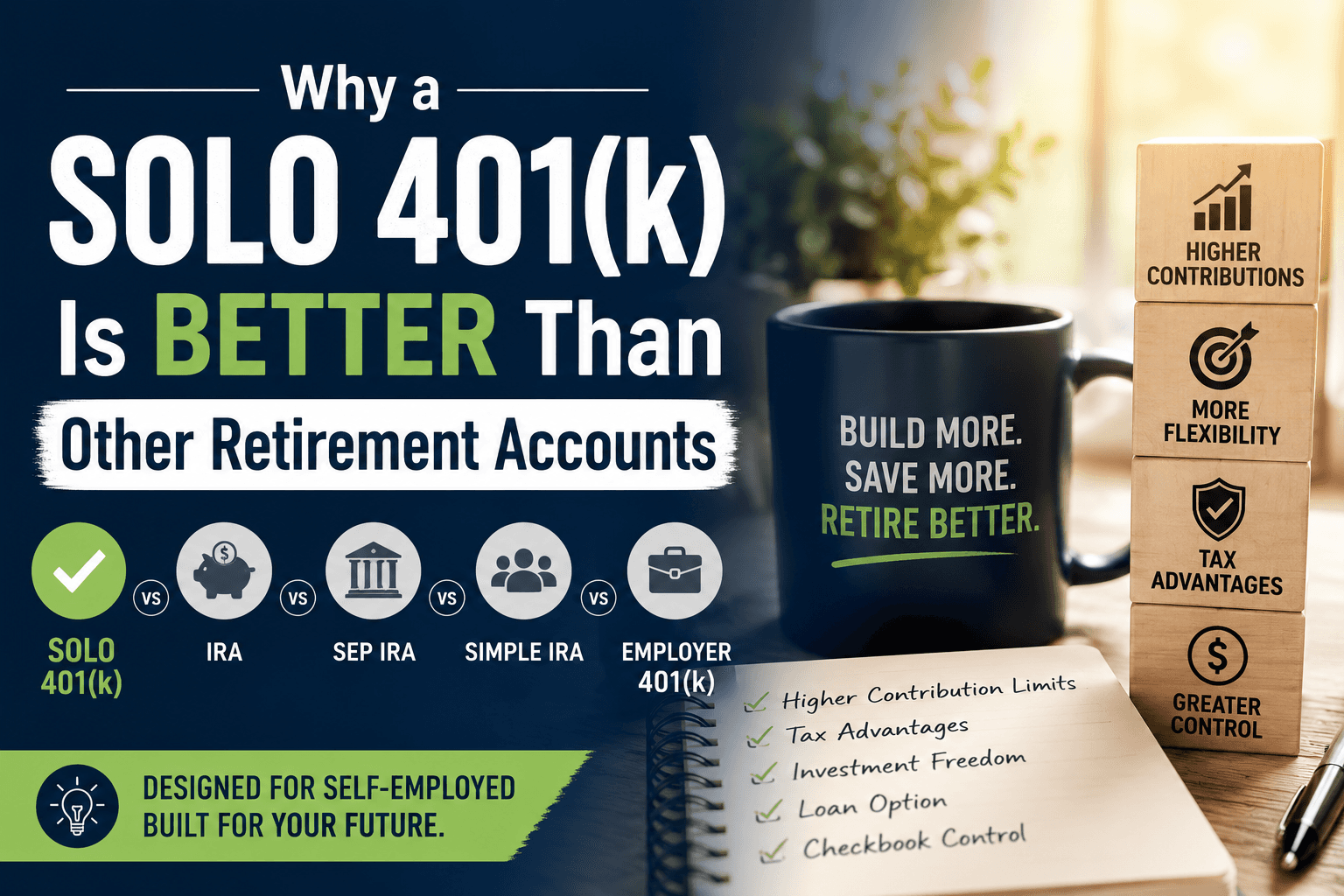
Why a Solo 401(k) Is Often Better Than Traditional Retirement Accounts

Choosing the right retirement account can have a significant impact on your long-term financial future. While Traditional IRAs, Roth IRAs, and employer-sponsored 401(k) plans each offer valuable benefits, many self-employed individuals and small business owners discover that a Solo 401(k) provides greater flexibility, higher contribution limits, and more investment opportunities. In this guide, we'll compare the Solo 401(k) to other common retirement accounts and explain why it has become one of the most powerful retirement planning tools available for entrepreneurs.

By Garrett Clark

Why Every Real Estate Agent Should Consider a Solo 401(k)

Retirement planning

Why Every Real Estate Agent Should Consider a Solo 401(k)

For many real estate agents, building wealth revolves around helping clients buy and sell properties, closing more transactions, and growing their business. Yet despite spending every day discussing investments, equity, and financial goals with clients, many agents overlook one of the most powerful wealth-building tools available to them: the Solo 401(k).

By Garrett Clark

What It Means to Be the Plan Administrator of a Solo 401(k)

Retirement planning

What It Means to Be the Plan Administrator of a Solo 401(k)

Learn what it means to be the plan administrator of a Solo 401(k) and the responsibilities that come with overseeing a self-directed retirement plan. This blog explores plan administration duties, compliance requirements, contribution monitoring, recordkeeping, IRS filings, prohibited transactions, and how Solo 401(k) owners can take a more active role in managing and maintaining their retirement strategy.

By Garrett Clark

What Happens to Your Retirement Plan If You Sell Your Business?

Retirement planning

What Happens to Your Retirement Plan If You Sell Your Business?

For many entrepreneurs, selling a business represents years of hard work, sacrifice, and financial commitment finally paying off. However, while business owners often spend significant time preparing their company for sale, many overlook an important question: What happens to my Solo 401(k) after I sell the business? The answer depends on how the business is structured, whether self-employment income continues after the sale, and what long-term retirement goals the owner has. Understanding your options before the transaction occurs can help prevent costly mistakes and ensure your retirement assets continue working toward your financial future.

By Garrett Clark

What Retirement Accounts Can You Roll Into a Solo 401(k)?

Retirement planning

What Retirement Accounts Can You Roll Into a Solo 401(k)?

If you've accumulated retirement accounts from previous jobs or years of self-employment, you may be wondering whether you can combine them into a single retirement plan. A Solo 401(k) offers one of the most flexible retirement planning options available, and in many cases, it also allows you to consolidate eligible retirement accounts. Doing so can simplify your finances, reduce administrative headaches, and provide greater investment flexibility. However, not every retirement account can be rolled into a Solo 401(k), and understanding the rules is essential to avoid unnecessary taxes or penalties. In this guide, we'll explain which retirement accounts can typically be rolled into a Solo 401(k), which accounts cannot, and why consolidating your retirement savings may benefit your long-term financial strategy.

By Garrett Clark

What It Means to Be the Trustee of a Solo 401(k)

Retirement planning

What It Means to Be the Trustee of a Solo 401(k)

Learn what it means to be the trustee of a Solo 401(k), including the responsibilities, investment authority, checkbook control, compliance considerations, prohibited transaction rules, recordkeeping duties, and why understanding the trustee role is critical for self-directed retirement investing. This detailed guide from Survival401k explains how trustees oversee retirement plan assets while maintaining proper retirement plan administration and flexibility.

By Garrett Clark

Why 9 in 10 Entrepreneurs Wish They Started Saving Earlier-What First Responders Can Learn

Retirement planning

Why 9 in 10 Entrepreneurs Wish They Started Saving Earlier-What First Responders Can Learn

Nearly 90% of entrepreneurs admit they regret not saving for retirement sooner. But this isn’t just a lesson for business owners - it’s a wake-up call for first responders, too. In this blog, we explore the parallels between entrepreneurship and emergency service careers, and how discipline, long shifts, and unpredictable schedules often lead both groups to delay financial planning. Discover how first responders can avoid the same pitfalls, take control of their retirement early, and build long-term wealth with tools like the Solo 401(k).

By Garrett Clark

What Is a Solo 401(k)?

Retirement planning

What Is a Solo 401(k)?

When you’re self-employed, building your own future means wearing a lot of hats - business owner, marketer, accountant… and yes, retirement planner. That’s where the Solo 401(k) comes in. It's a powerful, flexible retirement savings plan designed specifically for business owners with no full-time employees (other than a spouse). Whether you’re a freelancer, contractor, or running your own LLC, the Solo 401(k) could be your best-kept financial secret.

By Garrett Clark

W-2 + 1099 Income? Here’s How to Maximize Both Plans

Retirement planning

W-2 + 1099 Income? Here’s How to Maximize Both Plans

If you earn both W-2 and 1099 income, you have unique opportunities to maximize retirement contributions and reduce taxes. This blog breaks down how to strategically use a workplace 401(k) and a Solo 401(k) together, helping you take advantage of higher contribution limits, employer contributions, and flexible tax strategies to build long-term wealth.

By Garrett Clark

Retroactive First-Year Contributions: Leveraging New Solo 401(k) Opportunities

Retirement planning

Retroactive First-Year Contributions: Leveraging New Solo 401(k) Opportunities

Missed contributing to your Solo 401(k) last year? You might still have time. Thanks to retroactive first-year contributions, self-employed individuals can now open a Solo 401(k) and make contributions for the previous tax year - even after December 31. In this blog, we explain how this unique window of opportunity works, who qualifies, and how it can significantly boost your retirement savings and tax advantages. If you're self-employed and didn’t plan ahead, you’ve still got a powerful second chance.

By Garrett Clark

Stats Show Women Use Solo 401(k)s Even Less

Retirement planning

Stats Show Women Use Solo 401(k)s Even Less

Despite having more access to financial tools than ever before, women - especially self-employed women - are still vastly underrepresented in Solo 401(k) participation. This blog dives into the statistics behind the gender gap in retirement savings and explores why so many female entrepreneurs are missing out on one of the most powerful wealth-building tools available. Learn what’s holding women back, and how business-savvy women can take charge of their financial future by leveraging the tax benefits, flexibility, and control of a Solo 401(k).

By Garrett Clark

Ready to move from reading to doing?

When the reading has answered your questions, the Application Center walks through what to have ready.