
Financial Guidance

Can You Refinance Real Estate Owned by a Solo 401(k)?

Can you refinance an investment property owned by your Solo 401(k)? Yes, but refinancing retirement-owned real estate works differently from refinancing personally owned property. From non-recourse loans and cash-out refinancing to IRS prohibited transaction rules and potential tax advantages, understanding the process is essential. Discover how refinancing works inside a Solo 401(k), what lenders typically require, and how investors can potentially access property equity while keeping their retirement investments compliant.

By Garrett Clark

Investment Guidance

The Difference Between Owning Real Estate Personally and Through a Solo 401(k)

Should you own investment real estate personally or through a Solo 401(k)? Both approaches offer unique benefits, but the differences in taxes, rental income, financing, property management, and IRS regulations can significantly impact your investment strategy. Discover how each ownership structure works, what restrictions apply, and which approach may better support your long-term financial goals.

By Garrett Clark

Investment Guidance

The Real Estate Strategy Most Self-Employed Investors Never Consider

Discover the real estate strategy many self-employed investors overlook. Learn how a properly structured Solo 401(k) can potentially invest in real estate, expand your retirement investment options, and put your retirement funds to work in assets you understand.

By Garrett Clark

Investment Guidance

How to Invest in Real Estate With a Solo 401(k) Without Turning Your Retirement Plan Into a Business

Real estate can be one of the most powerful alternative investments available inside a self-directed Solo 401(k). Instead of limiting retirement savings to traditional stocks, bonds, and mutual funds, eligible business owners may be able to use retirement funds to invest in rental properties, land, private real estate investments, and other qualifying assets. However, there is an important distinction every Solo 401(k) real estate investor needs to understand: Your Solo 401(k) should be investing in real estate—not operating your personal real estate business. That distinction becomes especially important when buying, improving, and selling properties. A Solo 401(k) can buy and sell real estate, but investors should be cautious about creating a pattern of activity that begins to resemble a real estate development, construction, or property-flipping business.

By Garrett Clark

Investment Guidance

Solo 401(k) vs. IRA LLC for Real Estate Investing

Both a self-directed Solo 401(k) and an IRA LLC may provide access to real estate investments. Compare eligibility, ownership, financing questions, and ongoing responsibilities before choosing a structure.

By Ross Powell

Wealth Management

Can You Invest in Real Estate With a Solo 401(k)?

A Solo 401(k) may let eligible business owners invest retirement funds in rental property, land, or real estate syndications. Learn how plan ownership works, which transactions to avoid, and what to check before investing.

By Ross Powell

Why an Emergency Fund Is Your Financial Lifeline

Wealth Management

Why an Emergency Fund Is Your Financial Lifeline

In the world of personal finance, flashy investment strategies and wealth-building hacks often steal the spotlight. But beneath every successful financial story lies something far less glamorous - and far more powerful: a solid emergency fund.

By Garrett Clark

Why Custodial Control Makes a Solo 401(k) So Impactful

Investment Guidance

Why Custodial Control Makes a Solo 401(k) So Impactful

Custodial control is one of the most powerful advantages of a Solo 401(k), yet it’s often overlooked. This blog breaks down how checkbook control gives you the ability to move faster, invest beyond traditional options, and take a more strategic approach to building long-term, tax-advantaged wealth.

By Garrett Clark

Why Many Investors Want Control Over Their Retirement Investments

Retirement planning

Why Many Investors Want Control Over Their Retirement Investments

Many investors are starting to question traditional retirement accounts and the lack of control they offer. This blog explores why having control over your investments matters, how it impacts long-term wealth, and what options are available for building a more personalized retirement strategy.

By Garrett Clark

Why Financial Education Matters More Than Ever

Solo Business Guidance

Why Financial Education Matters More Than Ever

In today's rapidly changing economy, financial education is no longer a luxury. It is a necessity. From inflation and rising living costs to evolving retirement plans and investment opportunities, individuals are expected to make increasingly complex financial decisions throughout their lives. Unfortunately, many people were never taught how to manage money, invest for retirement, or build long-term wealth. Financial education empowers individuals to make informed decisions, avoid costly mistakes, and create a stronger financial future. Understanding how money works may be one of the most valuable investments a person can make.

By Garrett Clark

Why More First Responders Are Becoming Entrepreneurs

Wealth Management

Why More First Responders Are Becoming Entrepreneurs

More and more first responders - firefighters, EMTs, and law enforcement professionals - are turning their skills and discipline into thriving businesses. This blog explores why so many are stepping into entrepreneurship, from the desire for financial freedom to creating a legacy beyond the badge. We’ll highlight the unique advantages first responders bring to the business world, the challenges they face, and how tools like the Solo 401(k) can support their journey from service to self-employment.

By Garrett Clark

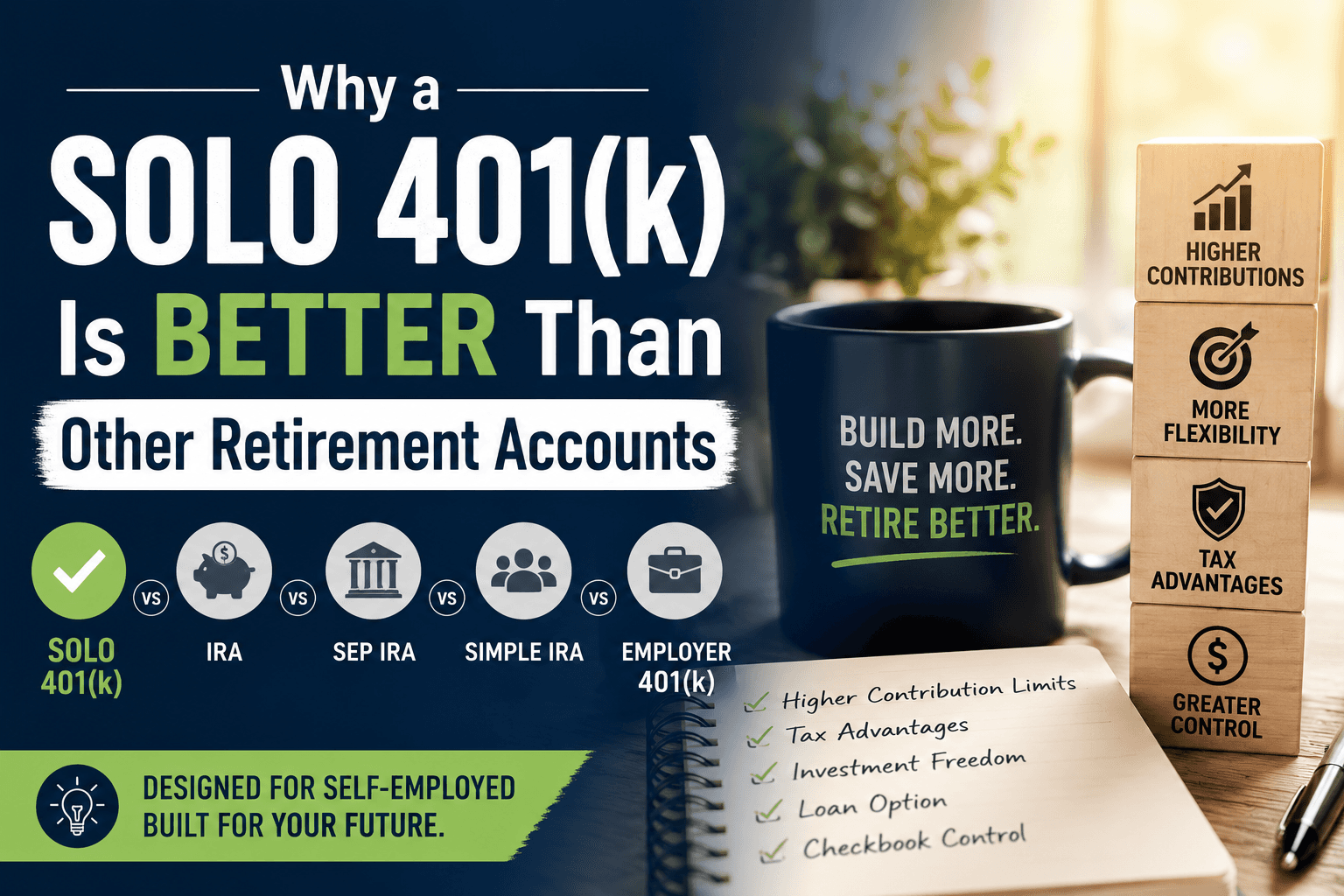
Why a Solo 401(k) Is Often Better Than Traditional Retirement Accounts

Retirement planning

Why a Solo 401(k) Is Often Better Than Traditional Retirement Accounts

Choosing the right retirement account can have a significant impact on your long-term financial future. While Traditional IRAs, Roth IRAs, and employer-sponsored 401(k) plans each offer valuable benefits, many self-employed individuals and small business owners discover that a Solo 401(k) provides greater flexibility, higher contribution limits, and more investment opportunities. In this guide, we'll compare the Solo 401(k) to other common retirement accounts and explain why it has become one of the most powerful retirement planning tools available for entrepreneurs.

By Garrett Clark

Ready to move from reading to doing?

When the reading has answered your questions, the Application Center walks through what to have ready.